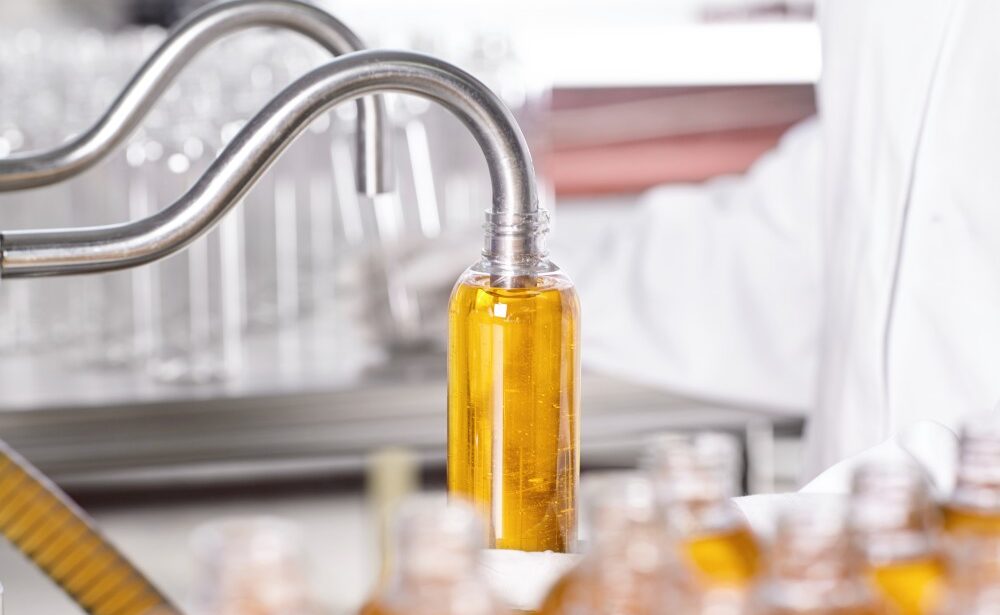
A liquid filling machine is the point in any manufacturing or packaging operation where the investment in product formulation, quality control, and supply chain management either pays off or is compromised by inconsistency that reaches the customer.
The Range of Liquid Filling Applications
The liquid filling machine category spans an enormous range of applications, from pharmaceutical vials filled to microgram accuracy under sterile conditions to 1,000-litre IBCs filled with bulk industrial chemical at flow rates of several hundred litres per minute. Between these extremes lies the practical territory of food production, cosmetics, household cleaning products, automotive chemicals, lubricants, paints, and agricultural inputs.
Each application demands a different configuration of filling technology, container handling, and control system. A machine configured for aqueous pharmaceutical liquids cannot be repurposed for high-viscosity adhesive without significant engineering changes. A system designed for food-grade oil must meet different hygiene requirements from one designed for industrial solvent. Understanding the specific requirements of the application before selecting equipment is the essential first step.
Filling Technologies and Their Applications
Liquid filling machine technologies vary according to the product’s physical properties and the accuracy required:
- Gravity filling: relies on the weight of the liquid above the fill head to drive flow into the container. Appropriate for thin, non-carbonated liquids where moderate accuracy is sufficient.
- Overflow filling: liquid is pumped into the container until it overflows through a return port, producing consistent fill levels regardless of container volume variation. Common in cosmetics and food products where fill level appearance is important.
- Piston filling: a piston reciprocates through a cylinder to draw and then dispense a precise volume of liquid. Well-suited to medium-viscosity products where volumetric accuracy is the priority.
- Peristaltic pump filling: fluid is moved by progressive compression of a flexible tube, producing a gentle action that does not stress shear-sensitive products such as emulsions and cell cultures.
- Gear pump filling: meshing gears create a positive displacement action that moves accurate, repeatable volumes of medium-to-high viscosity liquids.
- Weight-based filling: the container sits on a load cell platform and filling stops when the target weight is reached. The most accurate approach for high-value or regulated products.
High-Viscosity Liquid Filling Challenges
High-viscosity liquids present specific challenges that thin liquids do not. Thick adhesives, heavy lubricants, resins, and silicone-based products resist flow under low pressure. They do not clear the fill valve cleanly, leaving product hanging from the nozzle after the fill is complete. They may require heating to reduce viscosity to a pumpable level. They may vary in viscosity with temperature and batch-to-batch composition, creating fill accuracy challenges if the system is not designed to compensate.
High-viscosity liquid filling systems address these challenges through heated fill heads and piping, anti-drip nozzle designs, and pump technologies specifically engineered for viscous product displacement. Systems that are not correctly specified for high-viscosity products produce inconsistent fills, messy fill areas, and high product waste at the fill nozzle.
Speed Without Compromising Accuracy
The tension between filling speed and filling accuracy is one of the central engineering challenges in liquid filling machine design. Faster fill rates reduce the time available for the control system to react to the approaching fill endpoint, which tends to reduce accuracy. The solutions to this tension include:
- Two-stage filling: a fast fill stage to reach approximately 90 percent of the target, followed by a slow drip-fill stage that delivers the final quantity with precision
- Anti-siphon valves: prevent product from continuing to flow after the fill valve closes
- Zero-gravity nozzles: engineered to minimise product inertia at the end of the fill cycle
“Precision at speed is the hallmark of a well-designed system.” – Lee Kuan Yew
Fast and accurate liquid filling is achievable with well-designed equipment, but it requires the right combination of fill technology, valve design, and control system responsiveness – not simply a faster pump.
Integration with Downstream Equipment
A liquid filling machine in a production environment rarely operates alone. It receives containers from an infeed or denesting station, fills them, and passes them to capping, sealing, labelling, and palletising equipment downstream. The throughput of the filling machine must be matched to the capacity of these adjacent stations to prevent bottlenecks.
Selecting the Right Liquid Filling Solution
Equipment selection should begin with the product: its viscosity, temperature behaviour, corrosiveness, and the required fill accuracy. The container format and required production rate define the mechanical configuration. A reputable supplier who can demonstrate experience with similar applications and provides local technical support after installation ensures that the investment delivers reliable performance across years of production use.
Liquid filling machine solutions, specified correctly for fast and accurate filling of any liquid product type, are the foundation of a packaging operation that meets quality standards, maximises throughput, and minimises product waste on every production run.